Genesis opens with creation, the early human generations, the Flood and the nations. This section preserves the account’s sequence without assigning unsupported calendar years.
Genesis follows Abraham’s family, the covenant promises, Joseph’s years in Egypt and the family’s move there. Ages and intervals in the narrative do not by themselves establish an agreed BC date for every event.
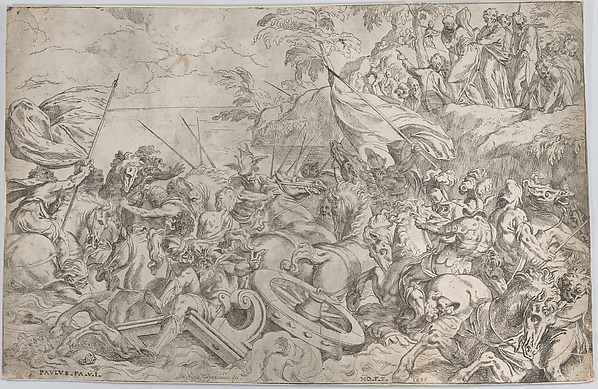
Exodus records the departure from Egypt and the journey through the sea. The following books describe Israel’s years in the wilderness. This preview does not choose between proposed calendar dates for the Exodus.
The biblical account describes Sennacherib’s campaign against Judah and the threat to Jerusalem. The capture of Lachish and the outcome at Jerusalem are distinct parts of the campaign.
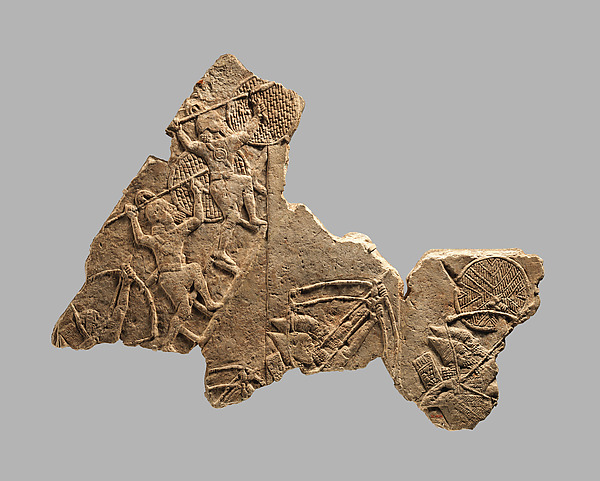
Assyrian palace reliefs depict the siege and capture of Lachish. They provide a record from the attacking empire alongside the biblical account of the campaign.
Assyrian siege relief, about 704–681 BC. This fragment is not identified here as the siege of Lachish. The Metropolitan Museum of Art · Public domain / CC0
Second Kings 25 describes the Babylonian siege, the capture of Zedekiah, the burning of the temple and royal palace, and the breaking down of Jerusalem’s walls. Many survivors are carried away, while some of the poorest people remain to work the land. Jeremiah 39 and 52 and 2 Chronicles 36 also describe this crisis.
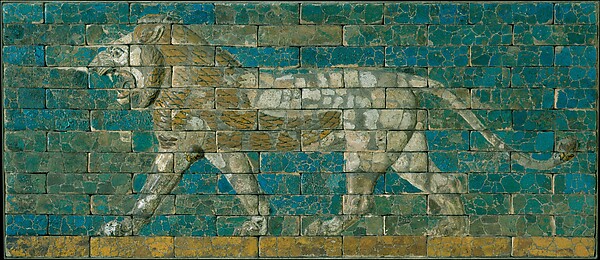
During Nebuchadnezzar II’s reign, Babylon was enlarged and ornamented with glazed-brick buildings, including the Ishtar Gate and Processional Way. The surviving lion panel comes from Babylon. It gives a view of the imperial capital during the period of Judah’s defeat and deportations.
A Babylonian architectural panel dated about 604–562 BC, during Nebuchadnezzar II’s reign. It comes from Babylon, not Jerusalem. The Metropolitan Museum of Art · Public domain / CC0
About these dates
The Lachish letters are a separate surviving source from Judah during the Babylonian crisis. Jeremiah 34:7 names Lachish and Azekah among the fortified cities still resisting. The image here shows a Babylonian architectural panel, not those letters or Jerusalem’s destruction.
The destruction of Jerusalem is commonly dated to 587 or 586 BC. These are alternative calendar reconstructions, not two separate destructions. The biblical accounts give regnal years and months; the modern BC year is a historical conversion.
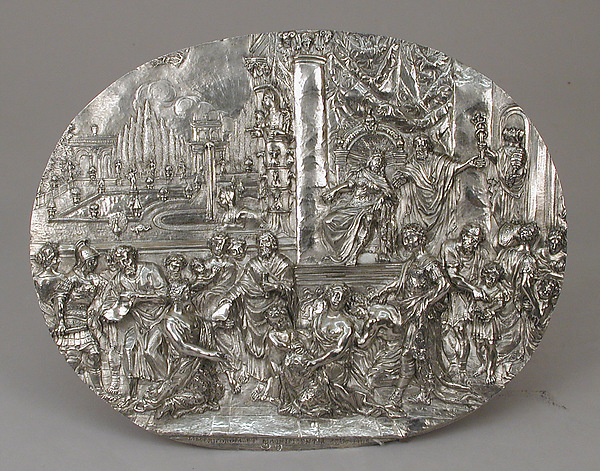
Ezra opens with Cyrus’s proclamation allowing the rebuilding of the house of God in Jerusalem and inviting the people to return. The text places the proclamation in his first year.
A late-seventeenth-century depiction of Cyrus releasing the Jews. This is not the Cyrus Cylinder. The Metropolitan Museum of Art · Public domain / CC0
World history
539 BC
Babylon enters the Persian Empire
Cyrus takes Babylon. The Cyrus Cylinder records the conquest and royal restoration policies. It provides imperial context; its inscription does not name the Jewish return described in Ezra.
Haggai and Zechariah encourage the returned community, and Zerubbabel and Jeshua resume work on the temple (Ezra 5:1–2). Haggai dates his opening message to the second year of Darius. Ezra 6:15 records the temple’s completion on the third day of Adar in Darius’s sixth year, followed by its dedication and the keeping of Passover.
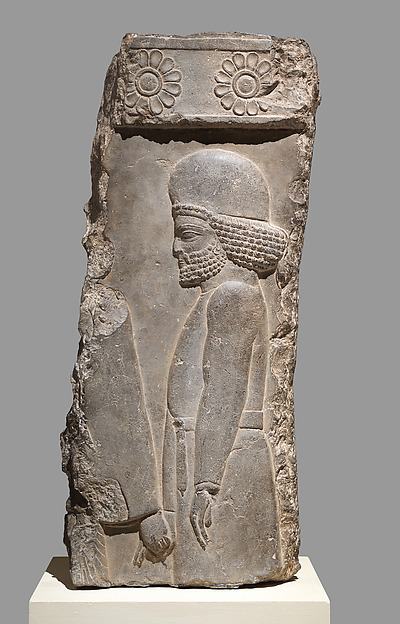
In Persia, Darius I began the royal complex at Persepolis around 518 BC. Successive rulers expanded its palaces, halls and stairways. This building programme overlapped the period of rebuilding in Jerusalem under the same empire.
A later addition at Persepolis, dated about 405–359 BC. This relief postdates the building work begun by Darius I around 518 BC. The Metropolitan Museum of Art · Public domain / CC0
About these dates
The comparison is between two building projects in the Persian period. The biblical account explains the temple work in Jerusalem; the archaeological source describes Persepolis. It does not establish that people rebuilding the temple visited the Persian royal complex.
Haggai’s second-year dates are conventionally placed in 520 BC. Ezra’s sixth-year completion is commonly placed in 515 BC, with 516 BC used in some chronologies. These calendar conversions are distinguished from the regnal years stated in Scripture.
In the twentieth year of Artaxerxes, Nehemiah receives permission to go to Jerusalem (Nehemiah 2:1–8). After inspecting the damaged walls, he organizes the work. Chapters 3–6 describe the workers, opposition and completion. Nehemiah 6:15 states that the wall was finished in fifty-two days.
During this same general period, Athens was building the Parthenon on the Acropolis. It was dedicated in 438 BC, with the larger construction and sculptural programme extending from 447 to 432 BC. Its scale and decoration expressed Athens’s civic and religious life.
About these dates
Time within this event: 52 days for the wall work, as stated in Nehemiah 6:15. This is not the length of the entire book or the journey from the Persian court. The Athens comparison places the rebuilding in a wider chronology; no contact between these projects is claimed.
Identifying this Artaxerxes with Artaxerxes I places Nehemiah’s arrival conventionally around 445 or 444 BC. The BC year is reconstructed; the biblical text itself specifies the king’s twentieth year. The dates concern the events, not the date when the whole book was written.
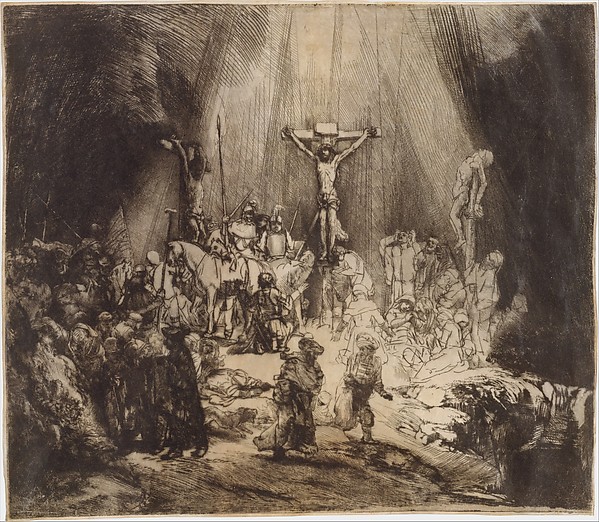
Luke recounts Jesus’ trial, crucifixion, burial and resurrection. The sequence is part of the biblical account; the calendar year shown here is a historical reconstruction.
Rembrandt’s 1653 depiction of the crucifixion; not an eyewitness image. The Metropolitan Museum of Art · Public domain / CC0
World history
AD 14–37
The reign of Tiberius
Tiberius rules the Roman Empire during the period assigned to Jesus’ ministry, death and resurrection. The imperial dates help locate the period without determining the precise year of the crucifixion.
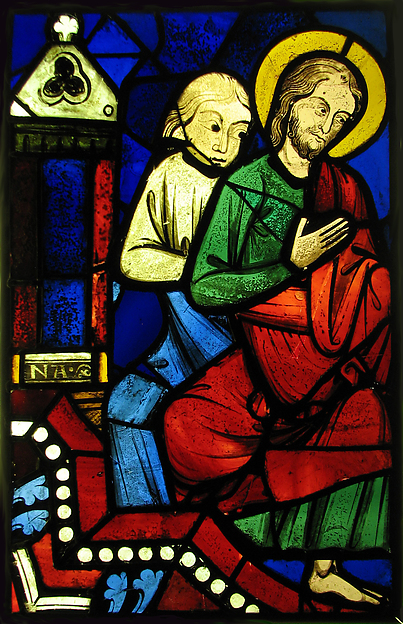
Acts opens with Jesus appearing to His apostles after His resurrection and then ascending. In Jerusalem at Pentecost, the disciples are filled with the Holy Ghost and speak in other tongues. The gathered people hear them in their own languages. Peter addresses the crowd, calls for repentance and baptism in the name of Jesus Christ, and about three thousand people are added that day.
40 days · Acts 1:3 states forty days of Jesus’ appearances after His resurrection, before His ascension. This is not a total for the whole of Acts 1–2.
French stained glass, about 1245–48. The museum identifies this fragment as possibly from a Pentecost scene. It is a later artistic depiction. The Metropolitan Museum of Art · Public domain / CC0
World history
AD 14–37
The Roman Empire under Tiberius
Tiberius is emperor during both proposed years for these opening events in Acts. His reign provides a firm imperial setting for Jerusalem and the wider Mediterranean world.
AD 30 or 33 — The risen Jesus instructs His apostles; About AD 62 — Paul teaches while confined in Rome
Using a beginning in AD 30 or 33 and an ending around AD 62 gives approximately 29–32 years. These are reconstructed dates for the events, not a date for the writing of Acts. The book does not explicitly total its elapsed years.
About these dates
Both proposed biblical years fall within Tiberius’s reign. His imperial dates do not decide between them.
The proposed AD 30 or 33 placement follows the resurrection chronology; Acts supplies the sequence rather than an AD year. The forty days in Acts 1:3 describe Jesus’ resurrection appearances before the ascension. They are not the total length of Acts 1–2, and no additional exact day count is assigned between the ascension and Pentecost.
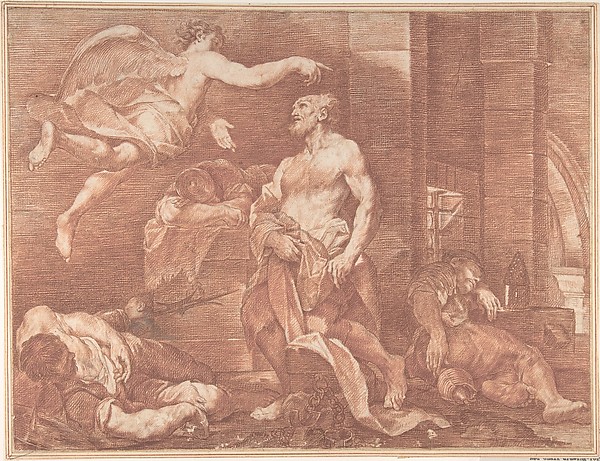
Herod has James, John’s brother, killed and imprisons Peter. Acts recounts Peter’s release by an angel while the church prays for him. Later in the chapter, Herod receives divine acclaim and dies at Caesarea. This ruler is Herod Agrippa I, whose reign over Judea ended in AD 44.
A seventeenth-century artistic depiction of Peter’s release in Acts 12. Details of the scene are the artist’s interpretation. The Metropolitan Museum of Art · Public domain / CC0
World history
AD 43–44
Rome celebrates the conquest of Britain
Roman forces invade Britain in AD 43, and Claudius joins the campaign. He returns to Rome and celebrates a triumph in AD 44. Cassius Dio describes the campaign and the celebration in successive consular years.
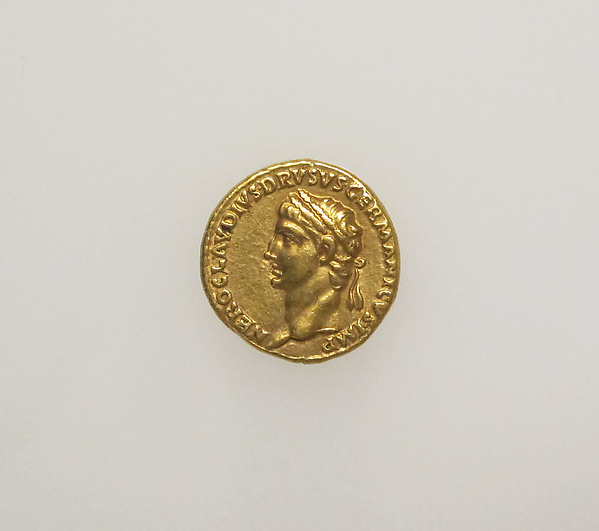
Gold coin of Claudius dated AD 41–45. This portrait illustrates the emperor; the coin’s date is distinct from the event date. The Metropolitan Museum of Art · Public domain / CC0
Time covered by Acts
About 30 years
AD 30 or 33 — The risen Jesus instructs His apostles; About AD 62 — Paul teaches while confined in Rome
Using a beginning in AD 30 or 33 and an ending around AD 62 gives approximately 29–32 years. These are reconstructed dates for the events, not a date for the writing of Acts. The book does not explicitly total its elapsed years.
About these dates
The world-history entry locates the period. Acts does not say that the people in this passage witnessed or were responding to that event.
The range is Agrippa I’s reign over Judea, rather than a claim that every event in Acts 12 happened in AD 44. Josephus also describes Agrippa’s death at Caesarea after three years ruling all Judea under Claudius. The interval between Peter’s release and the king’s death is not stated. Acts and Josephus retain their own details of the death.
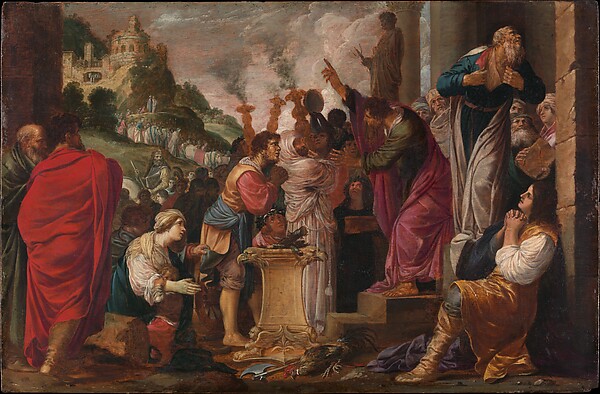
Sent out from Antioch, Barnabas and Saul travel to Cyprus and then into southern Asia Minor. Acts follows their preaching to Jewish and Gentile hearers, opposition in several cities, and return visits to strengthen the disciples. They appoint elders in the churches and return to Antioch to report what God has done.
Jacob Pynas’s later depiction of Acts 14 at Lystra. The museum record does not give an exact date for this painting; it is illustrative. The Metropolitan Museum of Art · Public domain / CC0
World history
AD 47
Claudius holds Rome’s Secular Games
Claudius stages the Secular Games to mark the eight-hundredth year from Rome’s traditional founding. Tacitus records the celebration and the appearance of Britannicus and the young future emperor Nero in the equestrian display.
Gold coin of Claudius dated AD 41–45. This portrait illustrates the emperor; the coin’s date is distinct from the event date. The Metropolitan Museum of Art · Public domain / CC0
Time covered by Acts
About 30 years
AD 30 or 33 — The risen Jesus instructs His apostles; About AD 62 — Paul teaches while confined in Rome
Using a beginning in AD 30 or 33 and an ending around AD 62 gives approximately 29–32 years. These are reconstructed dates for the events, not a date for the writing of Acts. The book does not explicitly total its elapsed years.
About these dates
The world-history entry locates the period. Acts does not say that the people in this passage witnessed or were responding to that event.
The approximate journey dates follow the cited reconstruction of Paul’s travels. Acts gives the route and order of events but does not give AD years or a total journey length. The independently dated Roman celebration is placed alongside that estimate; it does not fix the date of an individual stop.
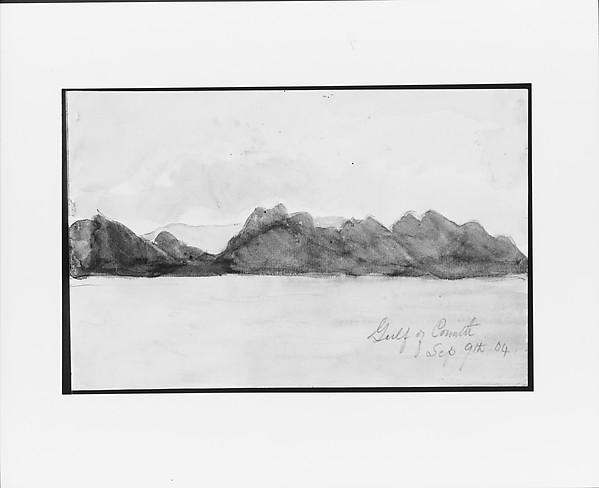
Paul meets Aquila and Priscilla and teaches in Corinth. Acts 18:11 gives a stay of a year and six months; verses 12–17 describe his appearance before Gallio. The calendar years are a historical reconstruction.
18 months · Acts 18:11 explicitly states that Paul continued there for a year and six months, teaching the word of God.
A 1904 landscape drawing of the Gulf of Corinth. It depicts the region, not Paul’s visit. The Metropolitan Museum of Art · Public domain / CC0
World history
AD 47–50 · Approximate founding range
London takes shape
Londinium is founded beside the Thames during Claudius’s reign. This follows the Roman invasion of Britain in AD 43. Its beginnings overlap the period of Paul’s journeys described in Acts.
Gold coin of Claudius, dated AD 41–45. This is a portrait of the emperor, not a picture of Londinium. The Metropolitan Museum of Art · Public domain / CC0
Time covered by Acts
About 30 years
AD 30 or 33 — The risen Jesus instructs His apostles; About AD 62 — Paul teaches while confined in Rome
Using a beginning in AD 30 or 33 and an ending around AD 62 gives approximately 29–32 years. These are reconstructed dates for the events, not a date for the writing of Acts. The book does not explicitly total its elapsed years.
About these dates
These events overlap in their approximate calendar dates. Scripture does not connect Paul with events in Britain.
Calendar years for the biblical events are estimates. Durations explicitly stated in Scripture are distinguished from reconstructed dates.
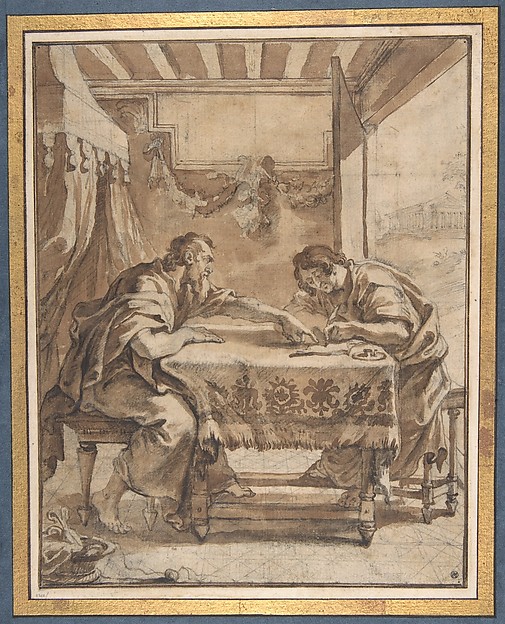
Paul teaches first in the synagogue and then in the school of Tyrannus. Acts describes the spread of the word among Jews and Greeks in the province of Asia. Later, Demetrius and fellow craftsmen raise an uproar over their trade in silver shrines of Diana. The town clerk dismisses the gathering, and Paul subsequently leaves for Macedonia.
3 months, then 2 years · Acts 19:8 gives three months in the synagogue; Acts 19:9–10 gives two years of teaching in Tyrannus’s school. Paul’s later recollection of three years in Acts 20:31 overlaps this ministry rather than adding another three-year stay.
A seventeenth-century depiction titled St. Paul Dictating at Ephesus. The imagined scene does not document a particular letter or teaching session. The Metropolitan Museum of Art · Public domain / CC0
World history
AD 54
Nero succeeds Claudius in Rome
After Claudius dies, Nero is acclaimed emperor on October 13, AD 54. Tacitus describes the soldiers’ acclamation and the Senate’s acceptance. The change of emperor falls within the approximate period assigned here to Paul’s Ephesian ministry.
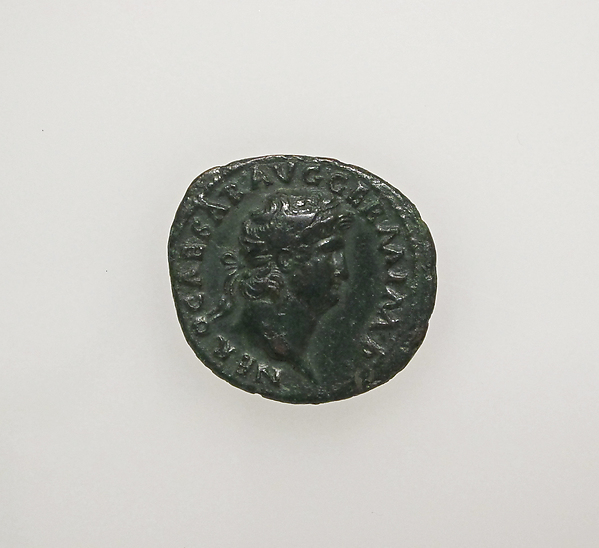
Bronze coin of Nero dated AD 64–66, later than his accession in AD 54. The portrait illustrates the emperor. The Metropolitan Museum of Art · Public domain / CC0
Time covered by Acts
About 30 years
AD 30 or 33 — The risen Jesus instructs His apostles; About AD 62 — Paul teaches while confined in Rome
Using a beginning in AD 30 or 33 and an ending around AD 62 gives approximately 29–32 years. These are reconstructed dates for the events, not a date for the writing of Acts. The book does not explicitly total its elapsed years.
About these dates
The world-history entry locates the period. Acts does not say that the people in this passage witnessed or were responding to that event.
The AD 52–55 range is a reconstruction. Acts 19:8 states three months in the synagogue, followed in 19:9–10 by two years of teaching in Tyrannus’s school. In Acts 20:31 Paul recalls three years of ministry among the Ephesian elders. These overlapping descriptions should not be added together as separate stays.
Paul is allowed to live under guard in Rome. He meets local Jewish leaders and later welcomes visitors while teaching about the kingdom of God and Jesus Christ. Acts ends with two full years in his rented lodging.
2 full years · Acts 28:30 records two whole years in his own rented lodging. The following verse describes his preaching and teaching.
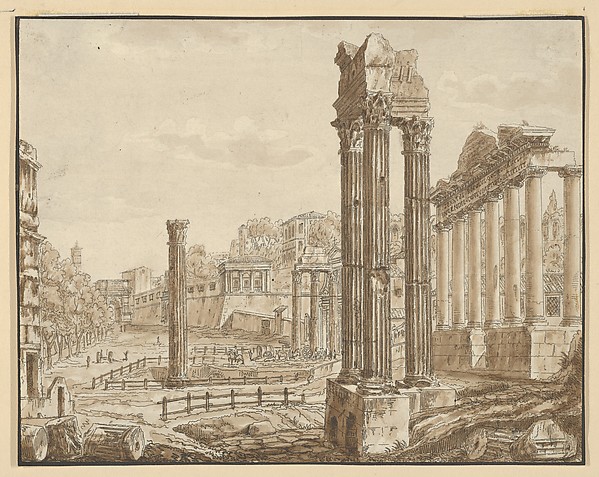
A later view of the Roman Forum. The structures shown are not a reconstruction of Paul’s Rome or his lodging. The Metropolitan Museum of Art · Public domain / CC0
World history
AD 60–61 · Approximate range
Boudica’s revolt reaches London
Boudica’s forces destroy Londinium during a revolt against Roman rule. This falls within the approximate period of Paul’s custody in Rome, under Nero. Acts does not connect Paul with the revolt.
Bronze coin of Nero, dated AD 64–66, a few years after the revolt described here. The Metropolitan Museum of Art · Public domain / CC0
Time covered by Acts
About 30 years
AD 30 or 33 — The risen Jesus instructs His apostles; About AD 62 — Paul teaches while confined in Rome
Using a beginning in AD 30 or 33 and an ending around AD 62 gives approximately 29–32 years. These are reconstructed dates for the events, not a date for the writing of Acts. The book does not explicitly total its elapsed years.
About these dates
These events overlap in their approximate calendar dates. Scripture does not connect Paul with events in Britain.
Calendar years for the biblical events are estimates. Durations explicitly stated in Scripture are distinguished from reconstructed dates.
John describes receiving the revelation while on Patmos and being instructed to write to the seven churches. The time of receiving or writing the visions is distinct from the time of the events shown in them.